
Inspect More Than The Broad Hull Surface
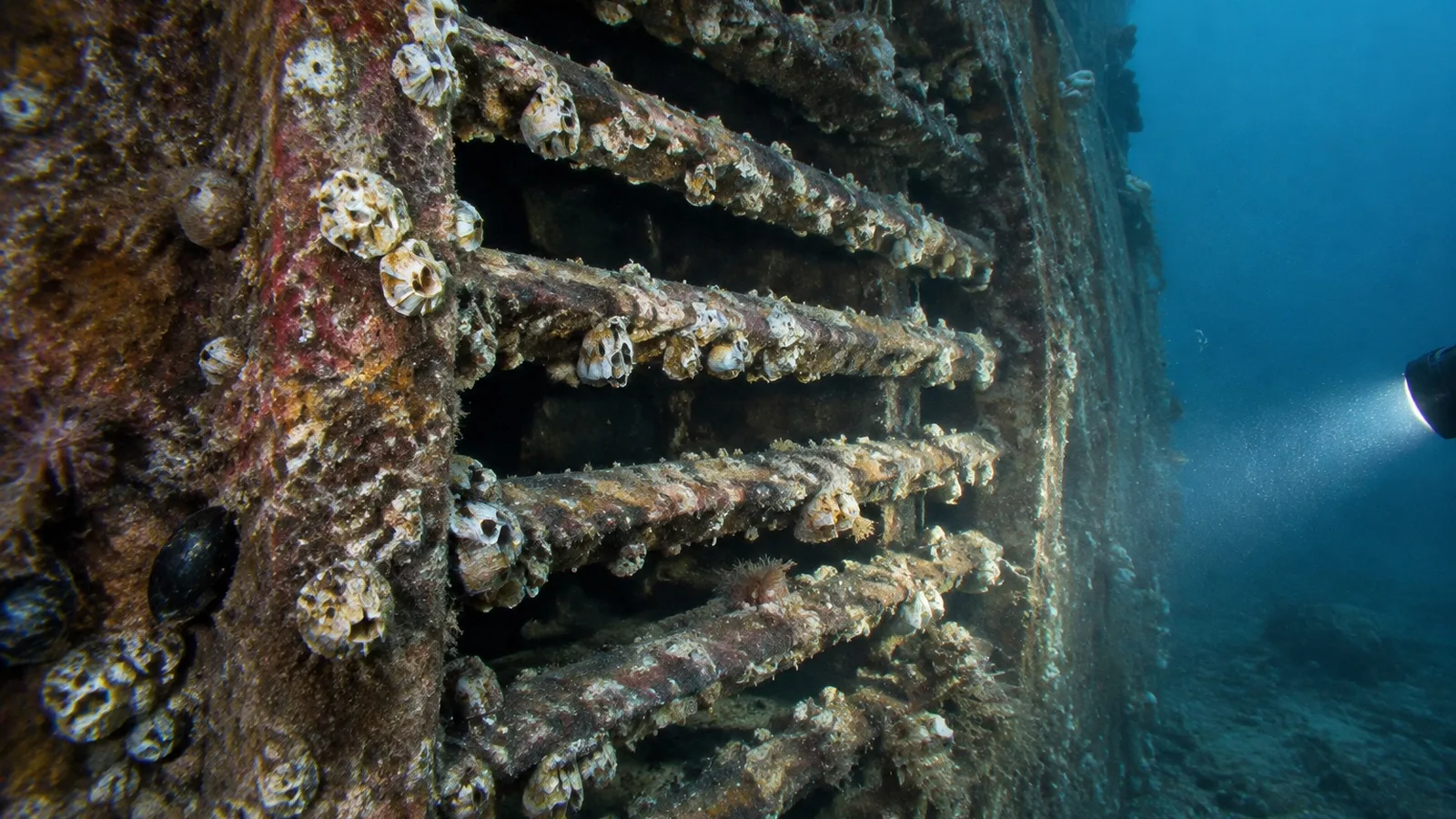
Biofouling management is broader than an occasional order to clean the hull. Growth is not evenly distributed across a vessel. Flat surfaces, sea chests, gratings, rudder recesses and other sheltered areas present different conditions. A general hull photograph can therefore miss places where growth remains after cleaning elsewhere.
The immediate decision is what needs inspection and what evidence is needed before choosing a method. Start with the actual condition, not with an assumption that one treatment will cover every underwater feature. The inspection scope should make niche areas visible in both the plan and the final record.
Use The Vessel History Without Replacing Observation
Idle periods, trading pattern, coating age and previous inspections help explain what a team may find. Send that history with the request. It gives context to the current concern and helps the provider understand why particular areas need attention. It does not establish the condition of surfaces that have not been observed.
Document the extent and type of growth and the condition of the underlying coating before choosing the cleaning method. Keep observation separate from expectation. A history of previous cleaning does not show that all areas are clear now, just as a long gap in the record does not describe exactly what growth is present.
Previous reports should be read for their boundaries as well as their conclusions. Check which areas were inspected, which were treated and which were inaccessible. If a niche area does not appear in the earlier record, do not silently treat it as clear. Identify the gap and include the question in the new inspection request.
Give Niche Areas A Defined Place In The Scope
Name sea chests, gratings, rudder recesses and other relevant sheltered areas in the inspection discussion. A general instruction to inspect the hull may not communicate the owner's concern about those features. The aim is to make the intended coverage understandable before the operation, not to rely on a broad description afterward.
Ask which areas can be observed and which can be reached for the proposed work. Inspection coverage and cleaning coverage should not be assumed to be identical. If access is limited, the final record needs to say so. A limitation is useful information for planning; leaving it unstated makes the result harder to interpret.
Representative images should remain connected to identified areas. A clear photograph from one part of the hull cannot stand for every niche location. The report should distinguish treated areas, residual growth and locations that remain uncertain. This is especially important when the broad hull surfaces look clean but the original concern included sheltered features.
Choose Cleaning With The Coating And Water In Mind
Biofouling is both an operational and an environmental issue. Organisms carried on underwater surfaces can be transferred between ecosystems. Cleaning needs to consider that wider concern as well as the visible condition of the vessel. Management planning and records are part of the response, not as an optional addition to a cleaning order.
An unsuitable cleaning method can damage a coating or release material into the surrounding water. The provider should explain the proposed system, its compatibility with the coating and the environmental controls. General claims about being environmentally friendly or suitable for every coating are not a substitute for that information.
Check coating-manufacturer guidance and the conditions imposed at the proposed port separately. Guidance on preparation and system selection does not itself give permission to clean at a particular location. If the operation is not permitted, the schedule needs a different plan. Do not allow a convenient berth window to become the reason for assuming approval.
What To Send And What To Ask
Send the available biofouling history, recent inspection evidence and coating information. Describe the broad hull condition and the niche areas that concern the owner. Explain which details are known and which need inspection. A request built this way gives the provider a set of questions to address rather than a predetermined answer to confirm.
Ask how the proposed system will be selected and what environmental controls will apply. Ask how partially cleaned and inaccessible areas will be reported. These questions belong before mobilisation because they affect both the intended work and the meaning of the final result. A report cannot correct a scope that never identified the owner's main concern.
Ask for the records to distinguish coating defects from remaining growth and access limitations. Those are different findings and may lead to different next steps. Combining them under a general description of incomplete cleaning makes future planning less clear. The owner needs to understand whether an area was treated, excluded or left with a condition that still needs attention.
A Practical Inspection And Cleaning Checklist
Use this list to connect the vessel's history with the proposed work. It helps keep niche areas and unresolved findings within the planning discussion.
- Send trading history, idle periods, coating age and previous inspection records where available.
- Identify sea chests, gratings, rudder recesses and other sheltered areas in the scope.
- Record current growth and coating condition rather than relying on history alone.
- Check manufacturer guidance and discuss the proposed system and environmental controls.
- Confirm local conditions and permission for the intended operation.
- Separate inspected areas, treated areas, residual growth and inaccessible locations in the report.
- Keep the results with the vessel's biofouling records for the next review.
Close The Record Before Planning The Next Visit
The next contractor should be able to understand the previous intervention without someone interpreting a folder of unlabelled images. Keep the inspection and cleaning results with the vessel's biofouling records. The file should explain what was seen, what was done and which questions remain open.
A clean broad hull surface is only part of that account. Niche areas, coating condition and limits of access also shape the next decision. Treat each intervention as part of a continuing record rather than an isolated order. That approach strengthens planning without pretending that one visit establishes the condition of every underwater feature.