
Define What The Inspection Must Establish
The useful question is not whether a diver or an ROV is generally better. It is which method can establish the condition required for the owner’s decision at the actual site. Start with the asset, the area to be covered and the information needed. A visual baseline, a damage assessment and a hands-on repair are different tasks, even when they concern the same structure.
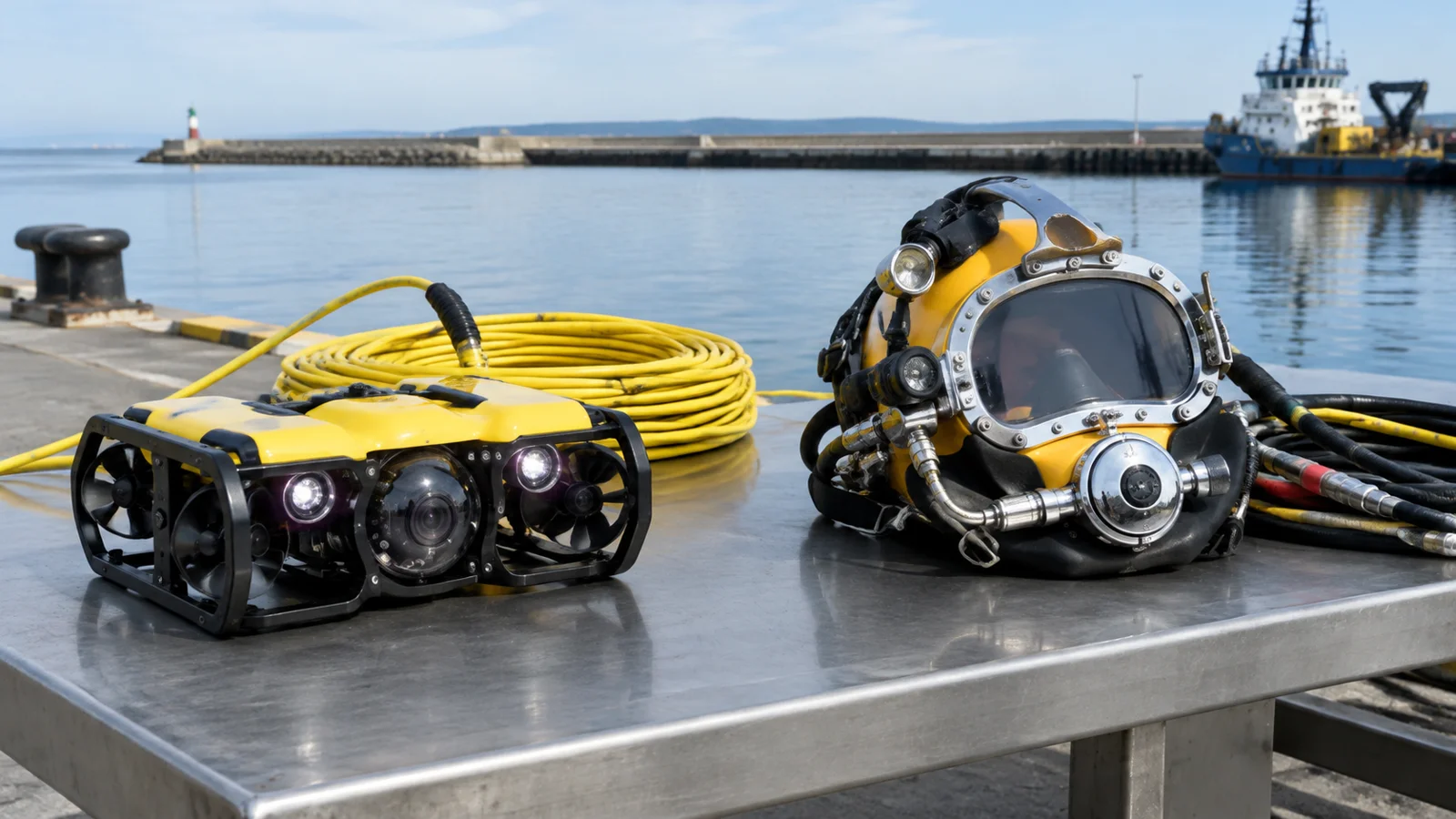
The existing ROV service covers submerged structures, hulls and cable or pipeline routes. It is used where diver access is unsafe or inefficient, where a long route needs coverage or where a repeatable visual baseline is wanted. Civil diving covers inspection, repair and construction support below water. These descriptions provide a starting point, but method selection still requires the scope and site conditions to be assessed together.
Separate Observation From Intervention
An ROV records underwater condition without placing a diver at every observation point. It does not replace divers as a whole. Where it is the safer or more efficient option, a remote survey may help define a later diving task rather than be the final step in the job.
Diver inspection can include visual and tactile checks and measurements appropriate to the agreed scope. Repair work may then involve separate tooling and preparation. Do not combine the observation and repair decisions into a single assumption. First establish what the inspection must record; then agree what intervention, if any, follows from the findings. Combined diver and ROV scopes are part of the existing service offering.
Assess Access, Flow And Visibility
Restricted access, depth and working conditions influence the proposed method. At an industrial intake, flow and suction are reviewed before diving. Where suction cannot be reduced safely, the plan may require a pump stop, partial isolation or an ROV inspection. Contaminated-water and confined-space scopes are assessed case by case; water quality, access and rescue provisions determine whether diving is acceptable or a remote method is used.
Poor visibility is not solved simply by choosing a camera instead of a diver. Visual inspection has limits in turbid water. Acoustic and measurement methods, or tactile diver inspection, are alternatives described on the site. The enquiry should explain the conditions already known and the kind of finding required. Keep uncertainty about visibility or access explicit rather than promising that one method will deliver every requested observation.
Agree The Record Before The Survey
ROV findings can be referenced to structure marks, chainage or coordinates so that a defect can be found again. Recorded routes and reference points support comparison with a baseline at a later inspection. This repeatability comes from the survey plan and the references retained, not just the presence of recorded footage. Decide how the surveyed areas and the findings will be identified before collecting the record.
The ROV reporting scope includes continuous video with overlay data, still images of defects and a written report with a defect register. Civil inspection verification includes video, photographs, measurements and supervisor sign-off. Agree the required output with the inspection scope and retain the limits of the chosen method. A useful report links the observation to its location and distinguishes the recorded condition from the decision on a repair.
Send The Scope Before Choosing The Equipment
Useful starting information includes drawings or as-built data where available, maintenance and incident history, previous inspection reports and the decision the owner needs to take. Add the location and known access restrictions. The group office is at Willemdok 4D in Antwerp, and the group works in Belgium, the Netherlands, France and Germany. A country on the coverage map does not, by itself, establish a local office or a guaranteed attendance time.
Use the linked services, sectors and location pages to describe the context, then ask for the method to be assessed for that scope. There is no published universal depth threshold, cost comparison or productivity figure that chooses between diving and ROV for every job. For planned work, send an enquiry for a quotation. For an incident in progress, call the emergency desk and provide the location, asset and what has happened.