
Define Two Tasks Before Ordering One Visit
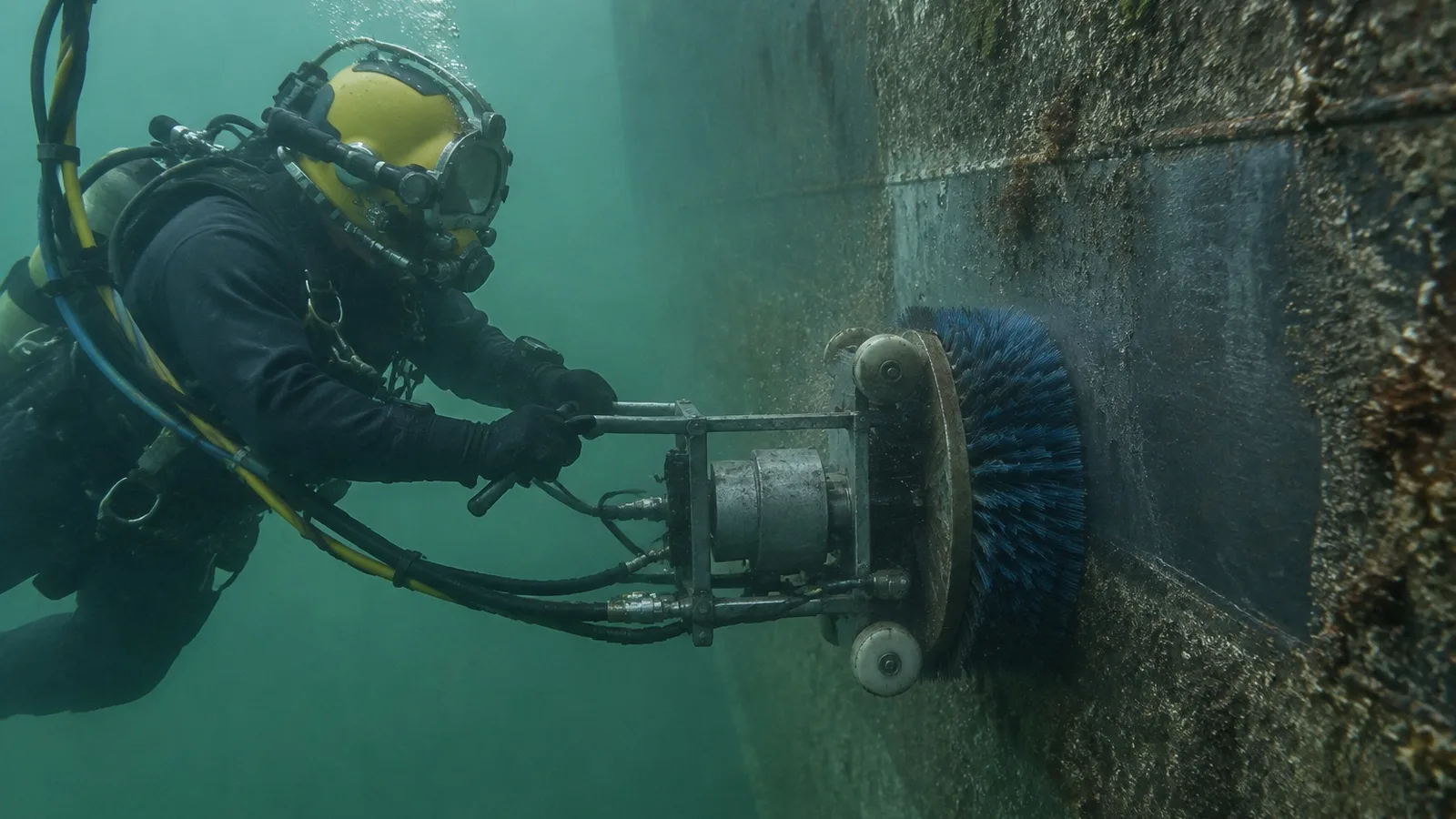
Hull cleaning removes growth from underwater surfaces. Propeller polishing addresses the condition and finish of the propeller. They may be requested together, but their methods, acceptance criteria and permitted working areas differ. A request to clean everything does not explain which surfaces are included or what result the owner expects from each task.
Start with the vessel's condition and the decision that needs to be made. Recent underwater evidence, cleaning history and coating information help frame the request. A berth window is only useful if the proposed operation is permitted there and the selected equipment is suitable for the coating.
Establish What Is Below The Waterline
Send recent photographs and explain when the hull was last cleaned. Include the coating type, application date, manufacturer guidance and biofouling record. These inputs answer different questions. The coating history describes the surface that needs protection. The underwater evidence shows the condition that the proposed cleaning needs to address.
Do not treat one photograph as a complete inspection. The request should identify sensitive areas, including sea chests, gratings, sensors and appendages. It should also distinguish the hull from the propeller. A view of a broad hull surface does not establish the condition of every feature or explain what can be reached during the planned operation.
Where information is missing, state the gap. An unknown coating detail should not become an assumption that any cleaning equipment will be suitable. Ask what needs to be established before selecting the system. A clear limit at this stage is more useful than a broad scope based on information nobody has checked.
Choose The Method Around The Coating And Location
The service provider should explain how the proposed system relates to the coating. The owner should supply the available manufacturer guidance so compatibility can be considered before mobilisation. The objective is not merely to remove visible growth. It is to define work that takes account of the surface beneath it.
Removed material also needs to be addressed in the plan. Capture and treatment requirements depend on the operation and its location. Ask how material will be managed and what environmental controls are proposed. A general description of cleaning equipment is not an answer to a location-specific question about what is allowed at the berth.
Local permission and environmental conditions should be confirmed before mobilisation. Do not assume that the availability of a contractor or a vessel's planned port stay gives permission to clean. If the proposed operation is not permitted, the work plan needs to change. The schedule should follow that decision rather than treating permission as an administrative detail to resolve later.
Give Propeller Work Its Own Scope
Propeller polishing should be described separately from hull cleaning. The quotation should explain the proposed propeller work and its reporting deliverables rather than placing it inside a general statement about underwater cleaning. This gives the owner a way to review the task on its own terms.
Agree the acceptance criteria before the operation. Without that discussion, the owner and provider may use the same word to describe different expectations. Ask what evidence will show the completed work and how any remaining condition will be recorded. Do not let a photograph of the cleaned hull stand in for a propeller record.
The same principle applies to boundaries. Identify the areas included and any locations that cannot safely be reached. A combined visit does not mean that every underwater surface is automatically within scope. Recording those boundaries before work makes the final report easier to read and reduces the risk of mistaking an excluded area for an overlooked task.
What To Send And What To Ask
Send vessel particulars, the berth and the available working window. Add coating details, the last cleaning date and recent underwater evidence. Include the biofouling record where available. Organise the request so that the provider can distinguish the hull condition, the propeller requirement and the constraints at the proposed location.
Ask for the method, environmental controls and reporting deliverables in the quotation. Ask which surfaces are included and how inaccessible areas will be handled in the record. A useful response should make the intended scope understandable without relying on a general promise of a clean vessel.
Avoid asking for an unsupported fuel-saving figure as the main measure of success. Vessel speed, loading, weather and machinery condition influence consumption. A clean-looking hull does not prove a particular saving. Use the owner's normal performance monitoring process for that comparison, and keep the cleaning report focused on the work and condition it can actually document.
A Practical Preparation Checklist
Use this list to check the request before confirming the operation. It brings the technical inputs and the local working conditions into the same discussion.
- Provide vessel particulars, berth details and the proposed working window.
- Send coating type, application date, manufacturer guidance and cleaning history.
- Supply recent underwater evidence and identify gaps in the available information.
- Define hull cleaning and propeller polishing as separate parts of the scope.
- Identify sensitive features, excluded surfaces and access limitations.
- Confirm local permission and discuss capture, treatment and environmental controls.
- Agree acceptance criteria and separate reporting for the propeller work.
Close With A Record Of The Actual Work
The cleaning report should identify treated areas and provide representative before-and-after evidence. It should record damage, inaccessible locations and growth that remains. Propeller work needs its own record. Together, these details show what was done without implying that the entire underwater surface received the same treatment.
Keep the report with the vessel's maintenance information so the next request can start from an understood condition. A defined scope and an honest close-out record are more useful than a broad claim about performance. They allow the owner to plan the next step from evidence rather than from the appearance of a few selected images.