
Define The Question Before Choosing Access
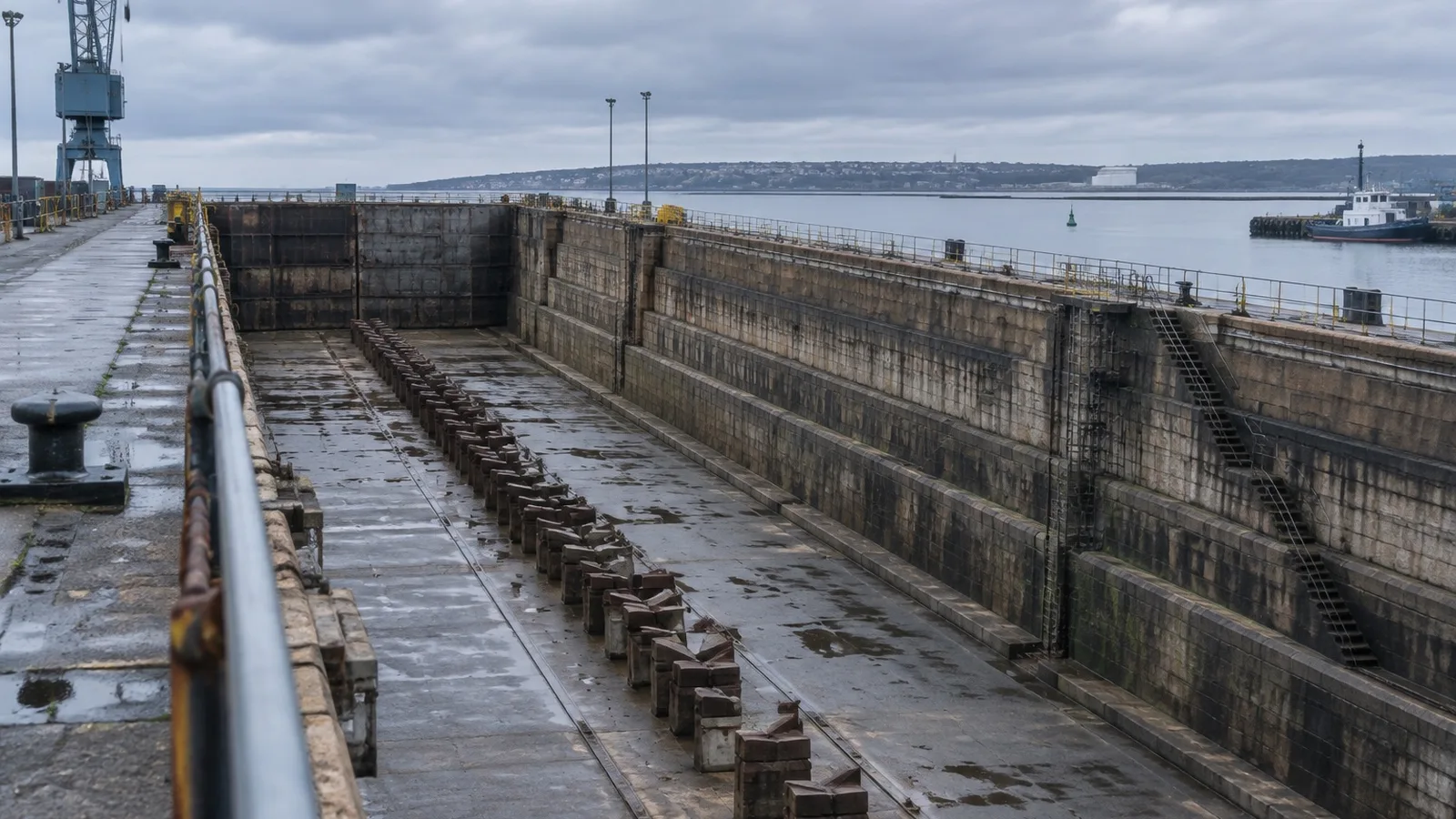
The decision starts with what the survey needs to establish. An in-water survey can examine a substantial part of the underwater hull scope while the vessel remains afloat. Drydocking removes the vessel from service, but provides the dry access needed for work that cannot be completed in the water.
These are not interchangeable answers to every problem. First define whether the purpose is to record condition, meet a survey requirement or prepare for work. The method should follow that purpose. A preference to avoid docking does not establish that an afloat survey will answer the question.
Keep Class Acceptance Separate
Whether class accepts an in-water survey in place of a docking survey depends on the society, the vessel, its age and the survey type. That confirmation belongs with the society, not with the diving contractor. Establishing the required acceptance is a separate task from arranging access to the hull.
Do not treat a contractor’s ability to perform an inspection as confirmation that the inspection will satisfy a particular survey requirement. Those questions may be discussed together, but they need distinct answers. Otherwise a technically useful inspection may still leave the owner’s original requirement unresolved.
Bring the purpose of the proposed survey into the discussion from the start. Ask what must be confirmed before committing to the scope. If acceptance has not been established, describe it as unresolved rather than allowing a proposed working method to become an assumed approval. This keeps the commercial decision tied to the actual survey purpose.
Understand What Can Be Examined Afloat
An in-water survey can cover hull plating condition and coating breakdown. It can also examine the propeller, rudder and stern gear, sea inlets, gratings and openings, and anode condition and wastage. These are useful areas of condition information, but a list of components is not yet a complete inspection scope.
For each area, explain what the owner needs to know and how the findings will be recorded. A general request to inspect the hull may mean different things to different readers. Defined locations and clear reporting expectations help avoid a report that contains images but does not answer the owner’s question.
The report should explain the actual coverage and any limits on the observations. It should not imply that every part of a listed component was examined simply because the component appears in the scope. The distinction between planned coverage and recorded coverage matters when the findings are used for a later decision.
Recognise Where Dry Access Is Needed
Structural work, full coating renewal and work requiring dry access or internal opening still need a dock. An in-water survey does not remove those requirements. Its role may instead be to establish information that helps decide when docking is needed and what should be prepared for it.
This changes the value of the afloat inspection. The useful outcome may not be a decision to avoid docking. It may be a better understanding of the work to be considered there. Keep that possibility visible when agreeing the scope, rather than treating any move towards docking as an inspection failure.
Avoid allowing a condition report to become an unsupported repair commitment. Seeing a condition underwater and defining the full work required are different stages. Where the available record leaves questions open, state them. The next decision should be based on what has been established, not on what the owner hoped the inspection would establish.
Make The Record Useful For The Next Decision
A survey record needs location references, photographs or video and a clear account of the findings. The owner should be able to connect a reported condition to the relevant part of the hull. Unreferenced footage makes that connection harder and can leave useful observations difficult to recover.
Separate what was seen from the interpretation and the proposed next action. This is particularly important when a recommendation affects docking plans. The report should show the evidence behind that recommendation without implying that the diving contractor decides class acceptance.
Previous reports can help frame the questions, provided the locations and coverage can be compared. Do not assume that a difference in the records proves a change in condition. First check that they describe the same area. Where comparison is limited, explain the gap so it can be considered in the next scope.
What To Ask Before Booking
Ask questions that separate acceptance, inspection coverage and possible follow-up work. A clear answer in one area does not settle the others. The owner may have confirmation about the survey route but still need a more precise inspection scope, or may have a useful scope while acceptance remains open.
Use a short preparation list to keep those questions visible. The purpose is not to predict the findings before the survey. It is to make sure the resulting evidence can support the decision that prompted the work.
- State whether the purpose is condition assessment, a survey requirement or preparation for docking.
- Confirm acceptance questions with the vessel’s society rather than assuming the contractor can decide them.
- Identify the hull areas and components to be examined.
- Send available previous reports and clarify the locations needing comparison.
- Agree the report references and how coverage limits will be stated.
- Identify questions that would still require dry access or further assessment.
Choose On Evidence Rather Than Preference
An in-water survey is useful when its scope answers the owner’s question and the required acceptance has been addressed. A dock remains necessary where the work requires it. Neither choice should be presented as a universal answer.
Close the survey with a clear distinction between findings, limitations and the next decision. If the inspection supports planning for docking, preserve that information in a form that can be used. If questions remain unresolved, name them. A decision made with visible limits is more useful than a confident conclusion that reaches beyond the available record.