
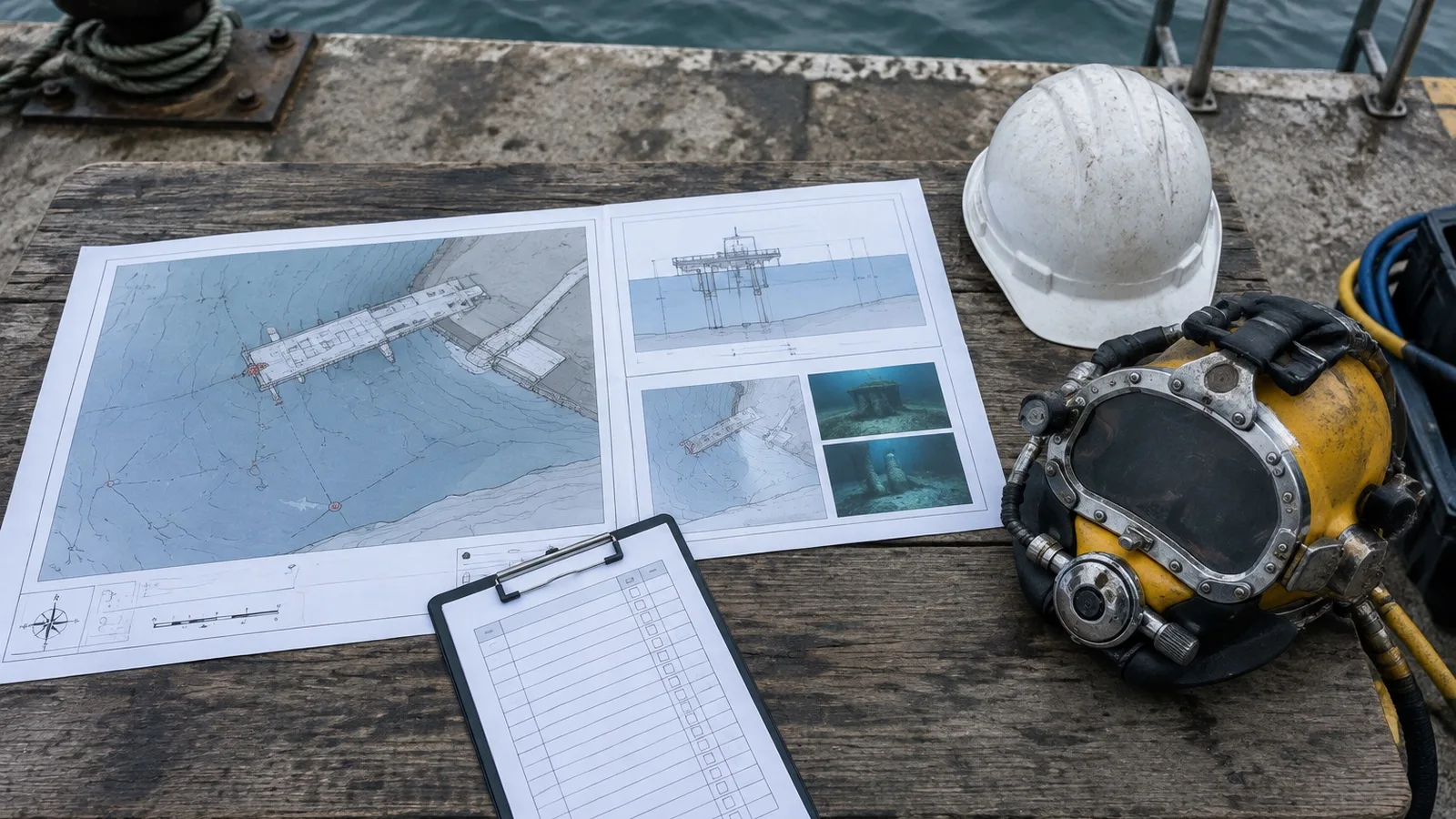
What A Dive Plan Is For
Clients who commission underwater work often receive a dive plan with the method statement. It can look like paperwork. It should not be. A dive plan earns its place by describing the actual site, the isolations, the recovery arrangements and the conditions under which work stops.
This article explains the questions a good plan answers, so that a client can read one with confidence and spot the gaps. It is an overview for clients commissioning diving, not a procedure for planning or conducting a dive. Personnel, equipment and rescue arrangements must be suitable for the work and comply with applicable local requirements.
A Site Description Is Not Enough
A useful plan connects the task to the site hazards. Inspecting a lock gate, replacing a vessel component and entering a water intake present different risks. Copying a previous plan without checking what has changed can conceal the most important differences. The same quay can be a different site on a different day, with another vessel alongside or another operation running nearby.
Begin with the scope and boundaries: what is to be inspected or repaired, how access will be achieved and which activities must remain suspended. Drawings and a pre-job visit often reveal conflicts that a written task description misses. A pipe on a drawing may be live in practice. A ladder shown on a plan may no longer be there.
The client can help a great deal here. The people who operate the site know its habits: when traffic is heavy, which systems start automatically and where access is awkward. That knowledge belongs in the plan.
Who Controls The Hazards?
Water movement, machinery, vessel traffic and electrical or hydraulic systems can be controlled by different people. The plan should identify who authorises each isolation and how its status is confirmed. A verbal assurance that “the pump is off” is not a complete arrangement. The plan should say who switched it off, how it is prevented from restarting and who may release it.
Traffic is a hazard of its own. In a working port or on an inland waterway, passing vessels and propeller wash affect the work area. The plan should state how traffic is controlled or warned, and who the contractor contacts if the situation changes.
- Name the supervisor and the operator’s authorised contact.
- Describe verified isolations and traffic controls.
- Set task-specific limits and conditions that require work to stop.
- State how the status of each isolation is confirmed before entry.
Plan The Abnormal Situation
The team needs arrangements for recovering a diver, loss of communications and a medical emergency. These must match the actual access and location. A generic emergency telephone list says little about how a casualty reaches help from a confined dockside work area. The plan should describe the route, the equipment and the people involved.
Stop conditions are part of the same thinking. Visibility, current, weather and changes in the task can all mean the work should pause. A good plan names these conditions in advance, so that stopping is a planned decision rather than an argument on the day.
What To Check When You Receive A Plan
A client does not need to be a diving specialist to read a plan critically. A few direct questions show whether the plan was written for this job or adapted from another one.
- Does the scope match what you asked for, including what is excluded?
- Are your site’s systems, isolations and contacts named correctly?
- Is traffic or other activity near the work area addressed?
- Is it clear who can stop the work, and when?
- Does the emergency arrangement fit the real access to the water?
- Does the plan say what will be recorded and delivered after the work?
Brief, Check, Revise
The pre-dive briefing turns the written plan into a shared understanding. Everyone involved should hear the same scope, the same limits and the same emergency arrangements. Site representatives are often welcome at the briefing, and their presence helps confirm that isolations and contacts are correct.
If visibility, current, access or the task changes, the supervisor reassesses the work rather than treating the original document as permanent permission. The final record should show deviations and the decisions taken in response. A plan that never changes on a complex job may simply mean that changes were not written down.
Common Weaknesses In Plans
Most weak plans fail in predictable ways. Recognising them helps a client ask the right question before the team mobilises, rather than on the quay.
- Contacts and system names copied from another site and never updated.
- Isolations described as intentions rather than confirmed arrangements.
- Emergency arrangements that assume easy access the site does not have.
- Stop conditions left vague, so that nobody knows when to pause the work.
- No mention of what changes if the task grows once the diver sees the actual condition.
- No description of the records the client will receive at the end.
A Plan Worth Reading
A dive plan is not valuable because it is long. It is valuable because it is specific. It names the real site, the real hazards and the real people who control them. It says when work stops and how a diver is brought back safely.
Clients who read the plan, correct what is wrong and add what they know about their site make the work safer. They also make it more predictable. That is a better use of a few minutes than filing the document unread.