
Decide What The Evidence Must Answer
Underwater quality starts with the owner’s question. An inspection can produce clear footage without establishing the condition the owner needs to understand. A repair can look complete without a defined acceptance process. Agree the intended result before deciding how it will be recorded.
The practical problem is that most people accepting the work were not underwater. They need a record that connects the scope, location, observations and checks. That record should explain both what was established and what remains uncertain. It should not require the reader to guess what happened between the first image and the final statement.
Define Acceptance Before Execution
An inspection needs agreed coverage and a basis for recording defects. A repair needs a defined arrangement and acceptance process. State these in terms that the owner and contractor understand in the same way. General phrases about a satisfactory result leave important decisions until after the work.
Identify the documents and people needed for acceptance. An owner’s review, a surveyor’s attendance and specialist testing have different purposes. Confirm which apply to the proposed task rather than assuming that one signature answers every question. If attendance affects the sequence, make that dependency visible in the planning.
In November 2026, Underwater Solutions Group was undergoing an ISO 9001 stage 2 audit, with a scope covering underwater works and contract management. An audit in progress is not a certification, and this article makes no claim that the company is certified. What an audit examines is useful for any owner: whether the documented way of working matches the work actually carried out.
Give Every Finding A Location
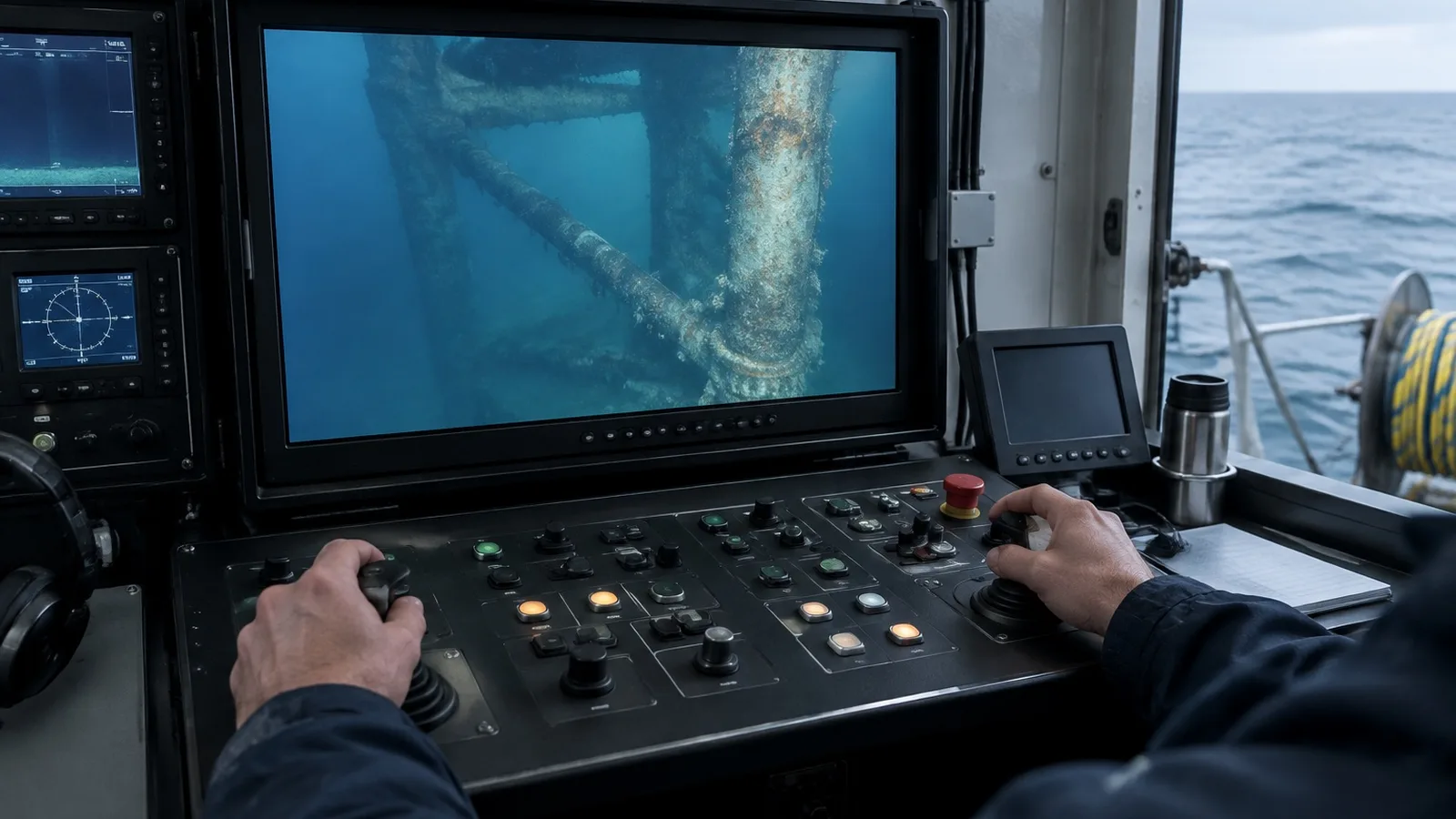
A video file is evidence, but it is not a complete report. The viewer needs to know where the camera was and which part of the scope is being shown. Use drawings, fixed reference points and clear file names to connect the image to the structure or vessel component.
Consistent sectioning also supports later comparison. If a later inspection uses unrelated locations or labels, the owner may struggle to establish whether a recorded defect has changed. Retaining a usable reference system helps make the next survey a comparison rather than a fresh exercise in finding the same area.
Record limitations alongside the findings they affect. Poor visibility or restricted access can limit a conclusion. An area that could not be inspected should not disappear from the report simply because there is no useful image. Distinguish missing coverage from an inspected area where no relevant defect was recorded.
Separate Observation From Interpretation
An observation describes what was found. An interpretation explains what that finding may mean. A recommendation proposes a next step. Keeping these separate allows another reader to understand which part rests directly on the recorded evidence and which part requires further judgement.
A defect register should link location, type, extent and photographic reference. Measurements and video can support that record where they form part of the scope. The reader should be able to move from a finding to its evidence without searching through unrelated files or relying on the diver’s memory.
Record defects outside the repair scope as well as those addressed. Finding a problem does not establish that it was included in the instruction to repair. Conversely, a completion record should not imply that every observed defect has been resolved. Clear boundaries help the owner distinguish completed work from maintenance still requiring a decision.
Check Before The Work Is Concealed
Some checks need to happen before the next stage conceals the work. Agree those hold points with the owner and any attending surveyor. A check that was expected but not arranged can become a source of delay or uncertainty after physical progress has been made.
Explain what evidence is required at each meaningful stage. A final image may show the completed surface without explaining the condition before repair or the work performed between stages. Before, during and after records have different purposes. They should be linked to the same location and scope so that the sequence remains understandable.
When the scope changes, revisit the evidence plan too. A new task may require a different check or additional acceptance input. Continuing to collect only the records intended for the original scope can leave the revised work poorly documented. Record the change, the reason and the agreed checks rather than allowing the report to imply an unchanged operation.
What To Check In The Handover
Read the handover as someone who was not present. It should explain what was done, where it was done and what supports acceptance. A large collection of files is not necessarily a usable record if their relationship to the completed scope remains unclear.
Where a record is missing, ask what can actually be established from the available evidence. Do not fill the gap with a stronger completion statement. A clearly recorded limitation is more useful for maintenance planning than an apparently complete report that leaves its reader with a false impression.
Leave A Record The Owner Can Use
Close-out should support maintenance planning and later surveys, not merely mark the end of the diving team’s attendance. Keep findings, photographs, video, measurements and completion documentation connected. The technical manager should be able to understand the result without reconstructing the job through separate conversations.
Quality is visible in the relationship between the instruction, the work and the evidence. A usable record shows that relationship plainly. It also preserves the limits of what was established. That leaves the next person with a documented starting point rather than an unexplained claim that everything below the waterline was completed.
- Match the completed work against the agreed scope and any recorded changes.
- Check that findings and evidence use consistent location references.
- Identify visibility, access and coverage limitations beside the affected conclusions.
- Confirm that required stage checks and acceptance records are included.
- Separate repaired defects from observations that remain outside the completed scope.
- List unresolved questions and the follow-up decisions still needed.