
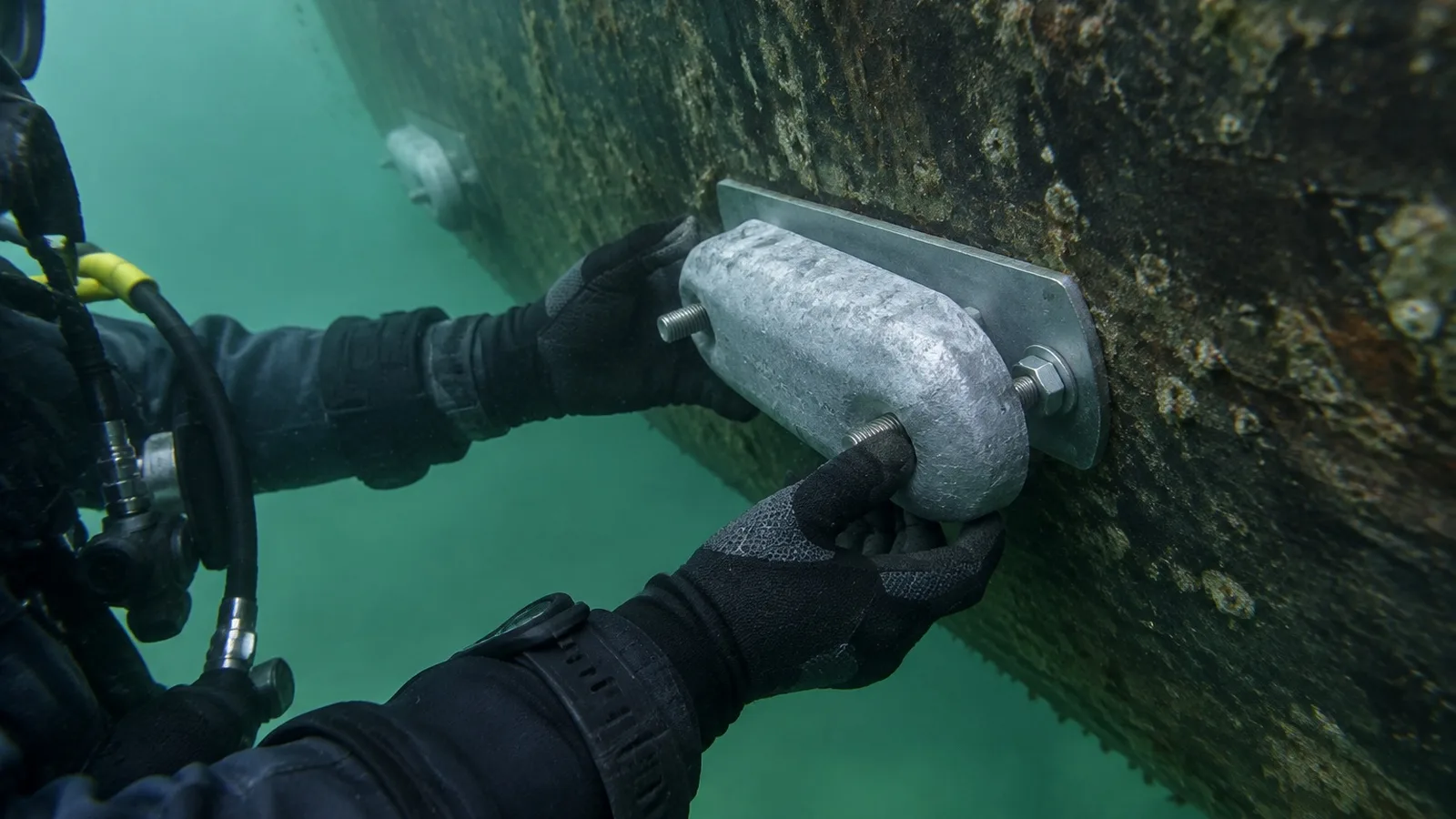
Replace To The Design, Not To Appearance
A sacrificial anode protects other metal by being consumed. Its material, size and position belong to a corrosion-protection design. Replacing an exhausted anode is therefore more than attaching a spare piece of metal. The first decision is whether the proposed replacement and its attachment match the required arrangement.
An afloat inspection can help identify condition and access. It cannot, by itself, establish that the entire cathodic-protection system performs correctly. Keep that distinction visible from the first enquiry. A request to replace anodes should explain what is known about the design and what still needs inspection or specialist assessment.
Establish The Required Parts And Locations
The owner should provide the anode arrangement drawing, material specification and recent inspection findings. These inputs connect the proposed replacement to a particular location and requirement. A photograph may show a worn anode, but it does not replace the specification for the part that should be fitted there.
Do not assume that an available spare is suitable merely because it looks similar. Match the replacement material to the approved specification and confirm the attachment details. Where the information is incomplete, identify what needs checking before installation. The purpose is to preserve the designed arrangement, not simply to make every visible position look occupied.
Distinguish an exhausted anode from a missing one. A missing anode may need more investigation because the cause of its loss matters. The surrounding attachment and hull condition should be part of that discussion. Replacing the part without addressing an unresolved attachment concern would leave an important question outside the scope.
Separate Condition From System Performance
An inspection can document anode condition and nearby coating or attachment defects. That evidence helps the owner decide what work to request. It should describe what was observed at the relevant locations rather than turning a set of photographs into a broad statement about the whole protection system.
Where electrical measurements or specialist assessment are needed, define them separately. They should not be assumed to form part of a visual inspection or a replacement task. Ask which question each part of the proposed work is intended to answer. This keeps a condition record distinct from an assessment of system performance.
The same care is needed when reviewing existing anodes that will remain in place. Record which ones are retained and why. The close-out file should not leave the next reviewer to guess whether an unchanged anode was inspected, excluded or simply absent from the photographs. A location-based record makes the limits of the work understandable.
Check Whether Afloat Installation Is Suitable
Access, current, visibility and vessel machinery affect whether replacement can be carried out safely at the berth. The small size of a replacement task does not remove those conditions from the plan. The supervisor and ship need to agree isolations and the exclusion area before diving begins.
Attachment work and damaged structure may require engineering review. Welding, where proposed, is assessed and authorised for the particular repair. It is not the default solution to every missing or worn anode. The proposed method should follow the attachment condition and agreed arrangement rather than being selected simply because welding is available.
Confirm any class or owner acceptance requirements as part of defining the work. Keep those requirements connected to the proposed installation and evidence. A completed underwater task is not the same thing as an agreed technical close-out if the parties have not established what they need to review. Resolve that question before treating the scope as settled.
What To Send And What To Ask
Send the arrangement drawing, material specification and recent findings together. Explain which locations are believed to need replacement and which remain uncertain. If the concern is based on a missing part, make that clear rather than describing every location as ordinary consumption. The distinction helps focus the initial review.
Ask how the replacement parts will be matched to the specification and how each location will be identified in the record. Discuss the attachment method, adjacent hull condition and any access limits. Where specialist assessment is outside the proposed scope, ask for that boundary to be stated so it is not lost during the work.
Ask what will be provided at completion. The record should connect each replaced anode with its location and corresponding part specification. It should also identify retained anodes and unresolved defects. The aim is a maintenance history that another technical manager can understand, not a collection of images that depends on someone's memory of the operation.
A Practical Replacement Checklist
Use this list to prepare the instruction and review its boundaries. It is not a replacement for the project plan or the technical design.
- Supply the arrangement drawing, specified material and recent inspection findings.
- Distinguish worn anodes, missing anodes and locations that still need inspection.
- Confirm replacement parts against the approved specification and attachment details.
- Record adjacent coating, attachment and hull concerns before treating the task as routine.
- Define any electrical measurements or specialist assessment as a separate requirement.
- Agree access, machinery isolations, exclusion arrangements and acceptance needs.
- Request a location-by-location record of replaced and retained anodes.
Leave A Usable Record For The Next Inspection
A good close-out record allows the next inspection to begin with a clear account of the previous work. It should show the installed parts, their locations and the relevant specifications. It should also make exclusions and unresolved concerns visible. Unreferenced photographs cannot provide that account on their own.
The practical goal is to maintain the designed corrosion-protection arrangement while documenting what the afloat work actually established. Do not turn a successful replacement into a claim that every aspect of the system has been verified. Keep installation evidence, condition findings and any separate performance assessment distinct so the owner can make the next maintenance decision on a clear basis.