
Start With The Reader’s Decision
An underwater survey report should help an owner decide what needs attention and what needs further investigation. Raw video is evidence, but it is not a substitute for that explanation. A reader should not have to watch every file and build a defect register before understanding the findings.
The report also needs to work for someone who was not present. That person needs to know where the survey took place, what it covered and what limited the observations. A useful report connects those details to the evidence without presenting an interpretation as something directly seen.
Define The Scope And Its Limits
Begin with the scope, date, weather and visibility conditions. Explain the structure or area covered using references that remain meaningful outside the site team. These details establish the context in which the findings should be read. Without them, the reader cannot tell whether a missing finding reflects a clear area or missing coverage.
Distinguish the intended scope from the scope actually completed. If an area could not be inspected, say so plainly. If the available view was limited, do not let a broad summary suggest a more complete examination than the record supports.
This is not a reason to make every sentence hesitant. Be direct about what the evidence establishes and equally direct about what it does not establish. The distinction makes the report more useful when the owner has to decide whether another inspection or a different form of assessment is needed.
Use One Location System Throughout
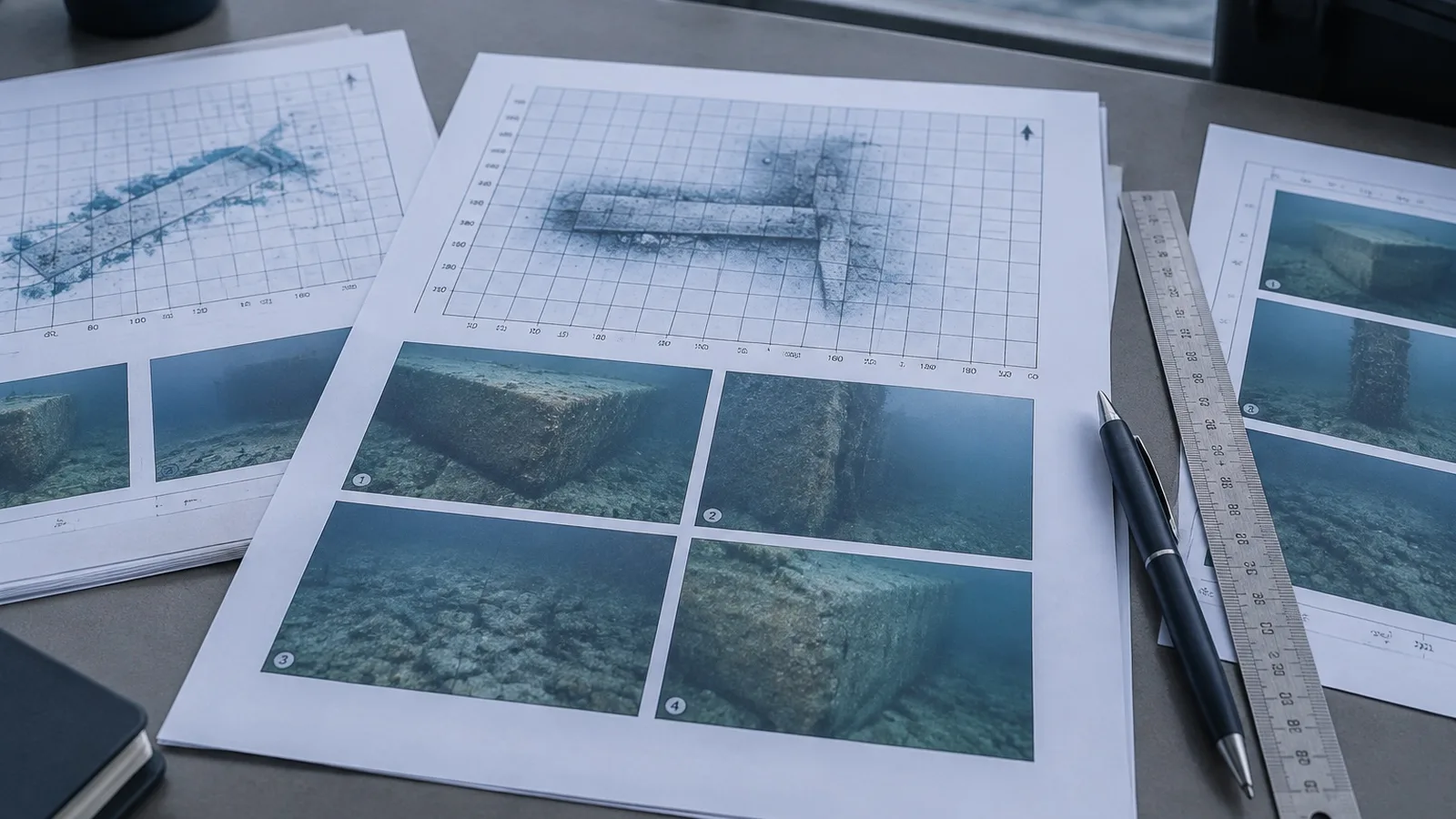
Fixed reference points and consistent sectioning hold the report together. The same location should be recognisable in the written finding, the photograph reference and the video record. Changing labels between those records creates work for the reader and makes comparisons less dependable.
A defect register should identify location, type, extent and photograph reference. Think of each entry as a route back to the evidence. The description should make the finding understandable, while the reference allows the reader to examine the supporting record without searching unrelated footage.
Keep that system available for later surveys. If successive inspections use different sections, the owner may be unable to compare them directly. Where references have changed, explain the relationship rather than leaving the next reader to infer it. A stable location system is valuable even when the people carrying out the inspection or reviewing the report change.
Separate Observation From Interpretation
An observation describes the condition recorded during the survey. Interpretation explains what that condition may mean. Both can belong in a useful report, but the reader needs to recognise the difference. A conclusion should not take the place of a description of the underlying evidence.
This matters when a report is used for maintenance planning. An owner may accept the observation while needing further advice about its implications. Keeping the two distinct allows that discussion without losing the original record or suggesting that every conclusion was visible directly in the footage.
Use the same discipline when discussing change. A previous report may provide a useful comparison, but only if the locations and coverage can be matched. If the records do not support a clear comparison, explain that limit. Do not turn a difference between two records into a definite statement about deterioration without an adequate basis.
Turn Findings Into Usable Options
A report should offer recommendations with options rather than a single unexplained verdict. Explain which finding an option addresses and what question remains open. This lets an asset manager see the link between the proposed next step and the recorded condition.
Do not blur recommendations and completed work. Identifying an area for further investigation does not mean it has been investigated. Likewise, a report describing a defect is not evidence that a repair has been carried out. Keep the status of each action clear throughout the document.
A useful summary directs the reader to the relevant detail instead of replacing it. It should make the important findings easy to find while preserving the scope limitations. If the evidence is incomplete, a recommendation can be framed around obtaining the missing information rather than presenting an unsupported final answer.
What To Check Before Accepting A Report
Review the report as if the survey team were unavailable to explain it. Can a reader identify the inspected area, find a particular defect and understand the basis of the recommendation? If not, ask for the missing connection rather than simply asking for more footage.
Check the supporting records against the written account. The aim is not to duplicate the survey. It is to see whether the report can be followed from scope through finding to evidence and then to the proposed next step. Missing links should be addressed while the context is still clear.
- Check that the scope, date and recorded conditions are included.
- Confirm that inspected areas and coverage limits are distinguishable.
- Match defect locations to the section references and supporting images.
- Check that observations and interpretations are presented separately.
- Look for recommendations that explain the available options.
- Confirm that the reference system can support the next inspection.
Preserve A Record That Can Be Reused
The report should remain useful after the immediate decision has been made. Store the findings with their supporting references so that a later survey can work from the same structure. A concise report with clear links is more useful than a long document whose evidence cannot be located.
The closing test is practical. Can the owner understand what was found, see the limits of the inspection and identify the next decision? If those questions are answered, the report has done more than document attendance underwater. It has turned a survey into a usable asset record.