
Choose The Method Around The Question
A note on scope first. Underwater Solutions Group works with its own divers; at the end of October 2026, eight of its dive teams were working at the same time in four countries. This article does not describe ROV services by the group. The guidance on remote inspection below is general, intended to help owners compare methods.
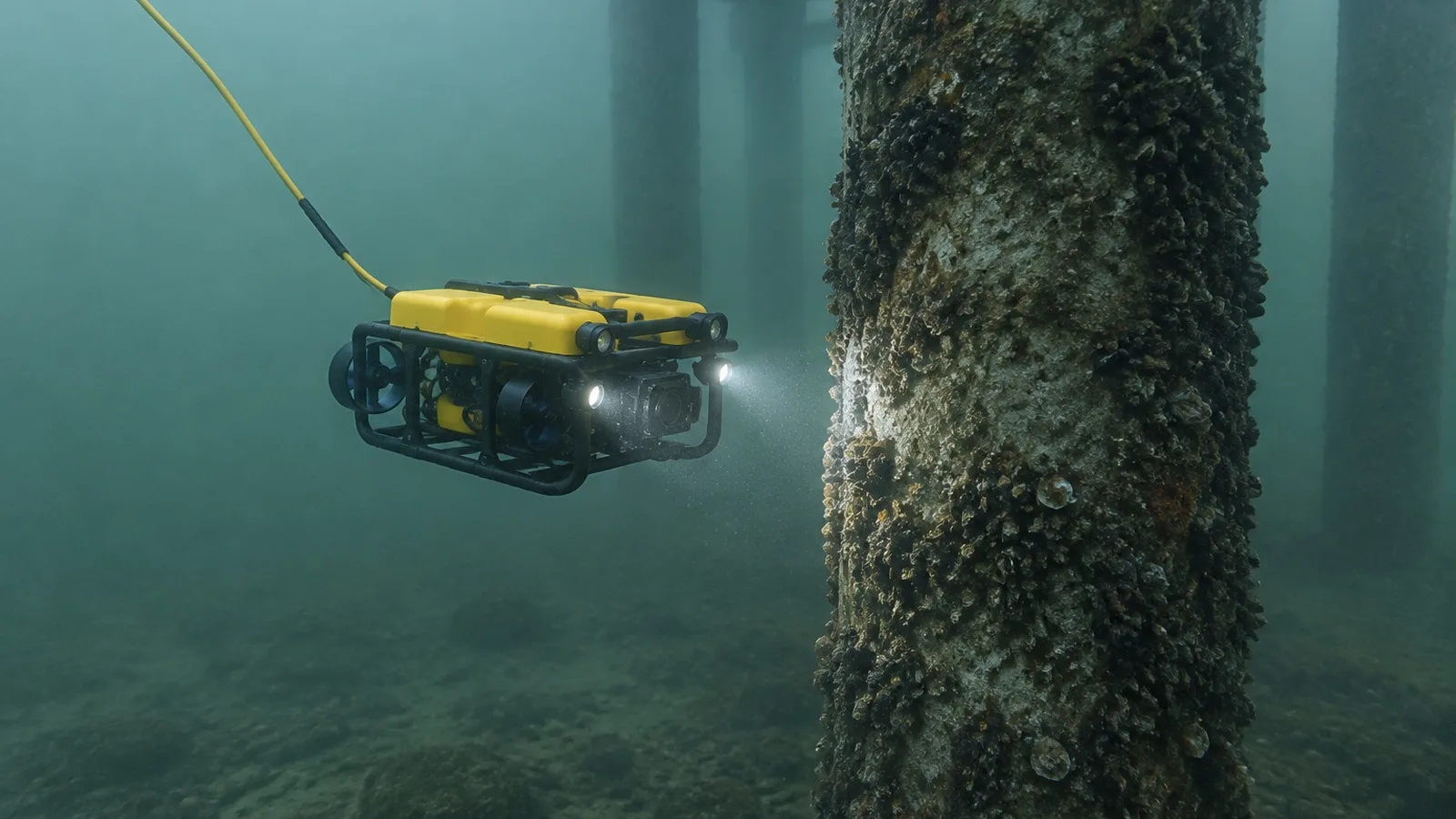
The choice between an ROV and a diver is about exposure and coverage, not simply about finding a cheaper way to put a camera underwater. An ROV is a different instrument. It is better suited to covering distance and depth consistently, while tactile assessment and physical intervention are weaker areas.
Start by separating the information required from the work that might follow. A visual survey may identify where attention is needed without completing the physical task. The right scope may use remote inspection, diver intervention or a combination, depending on what must actually be established and done.
Define Coverage Before Comparing Methods
Long routes and the need for a repeatable visual baseline are reasons to consider remote inspection. Depth, current and confined or hazardous access also form part of the decision. These criteria help frame the choice, but they should not be turned into a blanket claim that remote inspection is suitable everywhere.
Define the area to be examined and the questions the record must answer. A broad request for underwater footage leaves too much unresolved. The survey needs references that connect the coverage to the structure or route and allow a later reader to understand where an observation was made.
Coverage and completeness are not the same thing. Travelling along a route does not, by itself, explain what could be observed. The report should make the actual coverage and its limits clear. That distinction matters whether the inspection uses an ROV, a diver or both within the same scope.
Recognise Where A Diver Adds Value
The general distinction is practical: remote inspection is weaker at tactile assessment and physical intervention. Where the question requires touch or the task requires work on the structure, visual coverage alone may not answer it. Identify that requirement rather than expecting the camera record to carry a conclusion it cannot support.
This does not make a remote survey wasted work. It can identify where intervention is required and help focus the later diver scope. The useful question is what remains to be established or done after the visual inspection, not whether one method can be declared superior in every situation.
Avoid carrying a vague finding straight into a vague intervention request. Explain the location, the observed condition and the question still open. That gives the follow-up scope a clear purpose. If the remote record cannot establish the required detail, say so rather than turning a visual impression into a definite physical assessment.
Use A Combined Scope Deliberately
A common arrangement in the industry is remote inspection first, diver second. The remote survey identifies where intervention may be required, and diver time is then directed to where it adds value. This is a sequence with a defined handover, not simply two separate inspections of the same area.
Plan that handover in the reporting references. The diver scope should be able to use the locations identified during the remote survey. If the references change between the two stages, the follow-up team may have to spend effort reconstructing where a finding was recorded.
Keep the purpose of each stage distinct. The remote stage may provide coverage and a visual baseline. The diver stage may address specific questions or physical work. The combined record should explain what each stage established and what remains unresolved. Do not allow a completed remote survey to imply that all identified intervention has also been completed.
Make The Evidence Comparable
A repeatable visual baseline needs a reference system that can be used again. Clear sectioning and fixed reference points help connect findings across inspections. The same discipline also helps when remote and diver records are brought together in a single report.
Use referenced images or video and a findings register that identifies locations. Separate observations from interpretation. A reader needs to see whether a conclusion comes from visible evidence, later assessment or a physical intervention. Mixing those stages makes the record harder to use and can hide the limits of the original inspection.
When reviewing change over time, first check that the records describe the same area. Different coverage or unclear references can look like a change in condition when the comparison is incomplete. Explain the limitation instead of presenting a confident trend. The value of repeatable coverage depends on the reader being able to make that connection.
What To Ask Before Agreeing The Scope
Ask what evidence is needed, what access constraints affect the choice and what work may follow. Keep these questions separate long enough to understand them. A method that is useful for broad visual coverage may still leave a specific tactile question unanswered.
Use the scope discussion to define the output as well as the method. If the owner needs a condition record that can guide intervention, agree how findings will be located and how follow-up requirements will be identified. Otherwise the result may be footage without a usable link to the next task.
- Define whether the immediate need is visual inspection, tactile assessment or physical intervention.
- Identify the route or structure and the coverage required.
- Discuss depth, current and confined or hazardous access as method-selection criteria.
- Agree the reference system and the records needed for later comparison.
- Explain which findings would lead to a separate diver scope.
- Keep completed inspection distinct from proposed or completed intervention.
Finish With A Clear Boundary
The closing report should show what the selected method established and where its usefulness ended. If further assessment or intervention is needed, identify the question and location clearly. Do not describe remote coverage as a substitute for work that the record does not show was done.
A combined approach is useful when the stages support one another. Remote inspection can direct attention, while diver work can address the areas requiring physical assessment or intervention. The decision should remain tied to exposure, coverage and the actual task. The aim is a usable answer, with its limits visible, rather than a claim that one instrument replaces every other method.