
Begin With The Owner’s Decision
An underwater inspection should establish the condition needed for an asset decision. A quay wall survey, a lock inspection and an intake assessment share this purpose, but they do not share every access constraint. Begin with the structure, the area to be covered and the question the owner needs answered. Previous reports and available drawings help define that scope before anyone enters the water.
Civil underwater works include quay walls, sheet piling, lock gates, weirs, bridge piers, jetties and foundations. Industrial work includes cooling water intakes, outfalls, screens, pump pits and jetty structures. Keeping these scopes distinct makes preparation clearer. An inspection of a fixed structure is not simply a vessel survey moved to another location; the operator’s access, isolation and working arrangements must be understood.
Plan Around The Berth Or Waterway
At a working berth, vessel movements, access and the inspection window are agreed with the terminal. The existing civil service scope starts with a desk review of drawings, previous reports and access constraints. Works can often be organised without taking the berth out of service, but the working window and exclusion zone need agreement. Continued use is a planning condition, not a reason to skip the boundaries of the inspection.
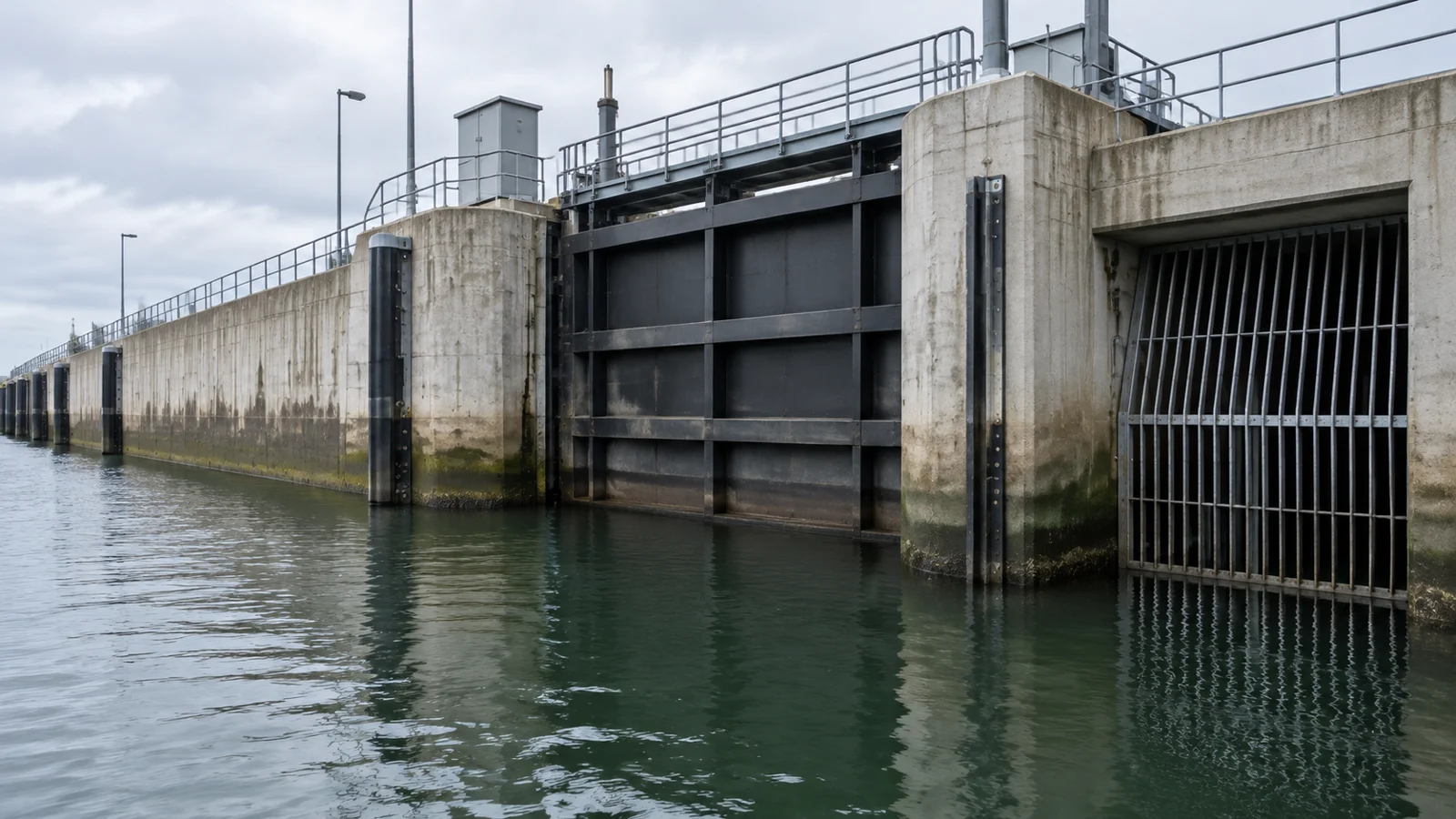
Locks, sluices and flood defences include gates, seals, sills, culverts and scour protection. Work in a lock, fairway or at a public quay requires notification or permission to be arranged before the dive. The dive plan, risk assessment and method statement should be prepared, and notification coordinated with the relevant port authority, terminal or waterway manager. The actual site determines which arrangements apply.
Treat Intake Flow As A Separate Constraint
An industrial intake inspection has to account for flow and suction. Flow conditions are reviewed before the dive. Where suction cannot be reduced to a safe level, the work is planned around a pump stop, partial isolation or an ROV inspection instead. An ROV option does not remove the need to assess the site. It changes the method under consideration, not the need to understand the operating system.
The plant’s work permits, isolation certificates, lock-out arrangements and induction requirements take precedence. The method statement is written to fit that system. Whether work can proceed without shutting the plant down depends on the isolation possibilities and is assessed with the maintenance engineers. A useful enquiry identifies the intake, its operating role and the available plant window, rather than assuming that underwater access will always be available.
Reference Findings So They Can Be Found Again
Damage is established through a survey first: visual and tactile inspection, thickness or crack measurement and scour depth checks, as appropriate to the scope. The repair decision follows the actual condition. An ROV inspection can reference findings to structure marks, chainage or coordinates. Those references make a defect identifiable on a later visit and keep separate inspection areas from being confused.
Visual inspection has limits in turbid water. Acoustic and measurement methods, or tactile diver inspection, may be used instead. Record how a finding was established and retain the limits of the inspection with the result. Routes and reference points can be documented for repeat surveys, allowing a later inspection to be compared against the baseline rather than treated as an unrelated collection of images.
Use The Report To Define The Next Step
Civil work is verified through video and photographs, measurement records and a written report signed off by the supervisor. ROV deliverables include recorded video with overlay data, still images and a written report with a defect register. After intake or basin cleaning, the record includes before-and-after video, the material removed, the observed condition and defects requiring follow-up. Match the requested report to the work being commissioned.
The group’s Antwerp and Netherlands bases support work across the Benelux waterway network. Location is one part of the enquiry, alongside the structure, previous records and intended decision. The related sector and location pages provide that operating context; they do not imply that a dedicated case exists for every quay, lock or intake. Send the available information for a quotation, or call the emergency desk for an incident in progress.